Last updated on January 7, 2026
The Digital Europe Programme (DIGITAL) is the European Union’s flagship initiative for 2021-2027, which aims to support the digital transformation of the economy and society by investing in key technologies. The program focuses on strategic areas such as artificial intelligence, data infrastructure, and cybersecurity, including multi-factor authentication (MFA).
From October 2025 until the end of March 2026, funding under the Digital Europe Programme will be available to a broad range of entities across the European Union, including SMEs, technology providers, research institutions, and public authorities responsible for cybersecurity. In 2025–2026, dedicated calls in the field of cybersecurity are open, offering substantial financial support for projects such as the deployment of a multi-factor authentication solution.
Phishing-Resistant FIDO-Compliant MFA
Try a 30-day Free Trial of Rublon MFA and enhance your organization’s security with a combination of multi-factor authentication and phishing resistance. Gain regulatory compliance and keep hackers at bay.
Why Apply for Funding Under the Digital Europe Programme?
Funding from the Digital Europe Programme in the area of cybersecurity is areal opportunity to support projects that build digital resilience, and at the same time comply with European regulations, such as:
- The NIS2 Directive – imposing obligations to protect critical infrastructure and key services against cyber threats;
- Cyber Resilience Act (CRA) – strengthening the resistance of digital products and services to attacks.
Benefits of participating in the programme include:
- co-financing of up to 75% of project costs (especially for SMEs);
- support for the implementation of innovative technologies;
- possibility of international and consortium cooperation;
- building competitive advantage through early use of advanced digital tools.
Why This is Important for SMEs and Technology Providers
Growing regulatory requirements in the European Union and the growing number of cyber incidents make digital resilience not just a competitive advantage but a necessity. In this context, solutions such as Rublon MFA can help enterprises implement strong user authentication policies that facilitate compliance with the NIS2 Directive and the CRA.
Overview of Open Calls for Proposals (Cybersecurity 2025–2026)
The table below summarizes the current open competitions within the Digital Europe Cybersecurity Work Programme 2025–2027 (DEP Cyber-09).
| Call | Objective | For whom? | Budget & funding |
| Coordinated preparedness testing and other preparedness actions (COORDPREP) | Penetration testing, threat analysis and risk scenarios | Public authorities, CSIRTs, NIS2 entities | 10 million EUR, 50% |
| Cybersecure tools, technologies and services relying on AI (CYBERAI) | Development of AI-based cybersecurity tools | Technology Providers, Cyber Hubs, NIS2, Research Institutes | 15 million EUR, 50% |
| Uptake of innovative cybersecurity solutions for SMEs (UPTAKE) | Increasing the cyber resilience of SMEs | SMEs, NIS2/CRA implementing entities | 15 million EUR; 50–75% |
| Regional Cable Hubs (CABLEHUBS) | Cyber security of submarine cables | State bodies, specialized companies | 10 million EUR, 70% |
| National Cyber Hubs (NCH) | Creating national hubs | Public entities designated by states | 2 million EUR, 50% |
| Cross-Border Cyber Hubs (CBCH) | Development of cross-border hubs | National hubs/SOCs, public entities | 2 million EUR, 50% |
Applying for a Grant
The Digital Europe Programme application process involves several key steps:
- Eligibility verification – make sure that your entity and project comply with the rules of the given competition.
- Building a consortium – cooperation between partners is not mandatory, but significantly increases the chances of success.
- Registration in the EU Funding & Tenders system – all applications are submitted via this portal.
- Preparation of project documentation – description of activities, budget, schedule, risk analysis, impact on digital resilience.
When preparing a proposal, it is important to clearly link the project to the objectives of the call and to emphasize its contribution to enhancing cybersecurity across the EU.
How to Apply for a Grant in the Digital Europe Programme – Step-by-Step Instructions
Here’s what you need to do to receive EU funding under the Digital Europe Programme:
Register an EU Login Account
1. Create an EU Login account. After opening the link, select your language in the upper right corner, then complete the short registration form and complete the process by clicking Create an account.
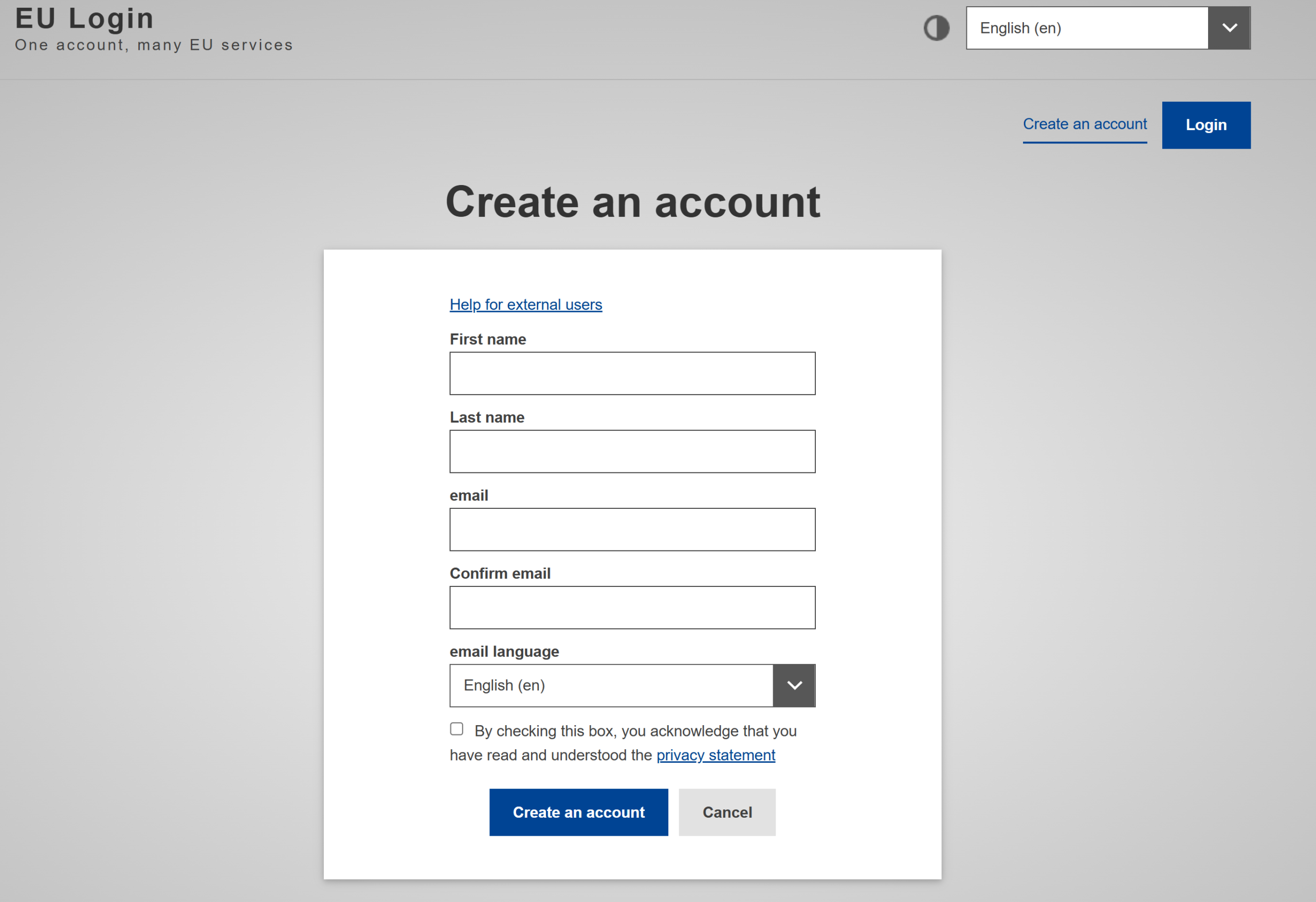
2. To complete the account creation process, click the link sent to the email address provided in the registration form. Next, set your password. The same email also contains your assigned username. The entire process must be completed within 24 hours of receiving the email.
Add an Organization to the Participant Register
1. The next step is to register the organization in the EU register of participants (Participant Register). To start this process, log in to the portal using the previously created EU Login account – click the Sign in button in the upper right corner of the page. After entering your email address or username, you’ll need to select your preferred multi-factor authentication method.
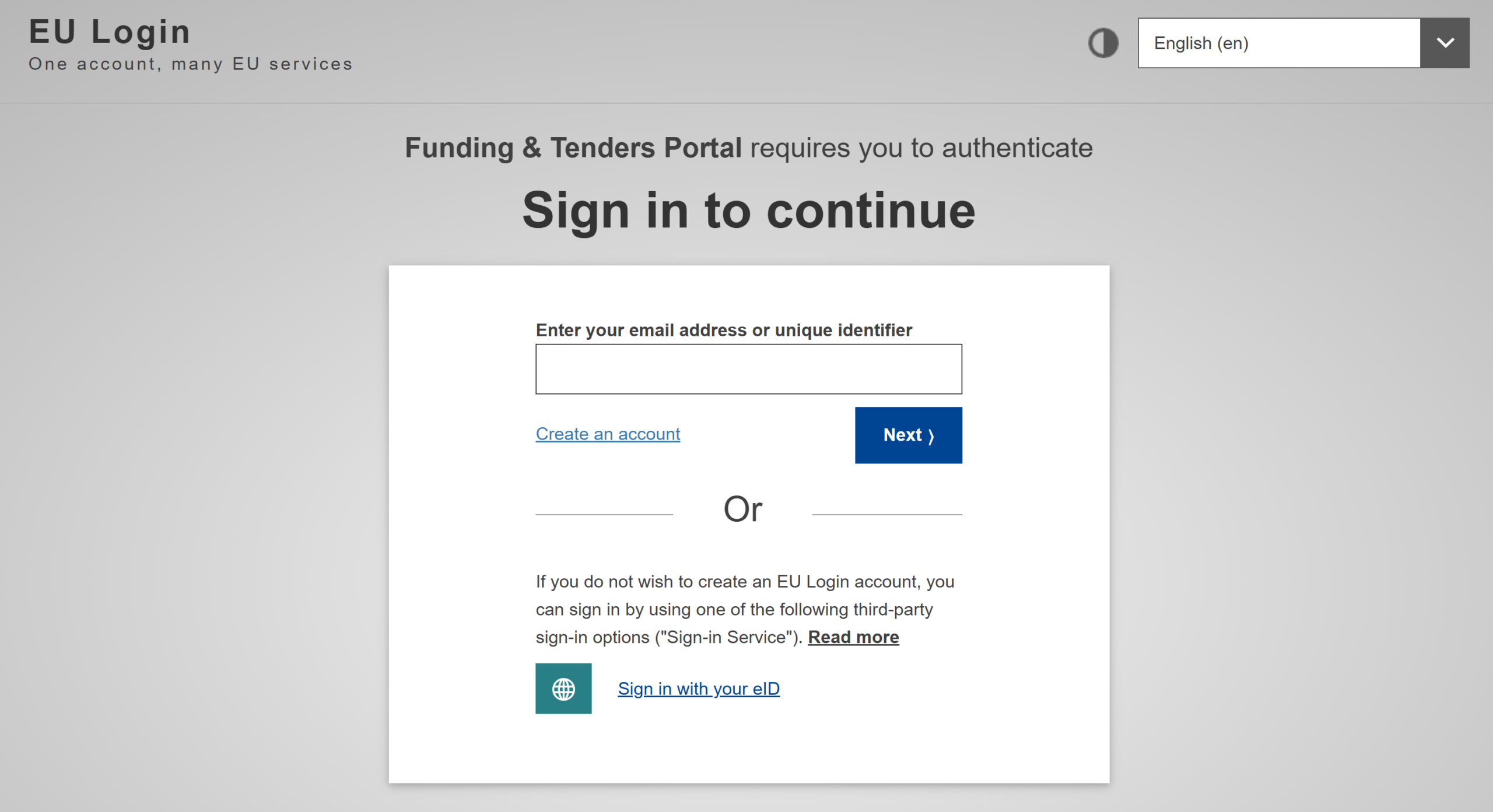
2. After logging in to the portal and accepting the terms of use, select the option “Register your organisation” to start the entity registration process.
3. Registering an organization in the EU system is done using an intuitive form divided into six steps. On the first screen – “Identification” – you must provide basic entity details, such as the full legal name, country of registration, and VAT identification number. In the next steps, the system will ask for organizational and legal information, details of authorized persons, and a summary. The entire process can be completed in just a few minutes, provided you have your company details ready.
Find the Right Call
1. Once you complete the registration process, the system will automatically assign your organization a unique PIC (Participant Identification Code), which is required to start submitting funding applications under EU programmes.
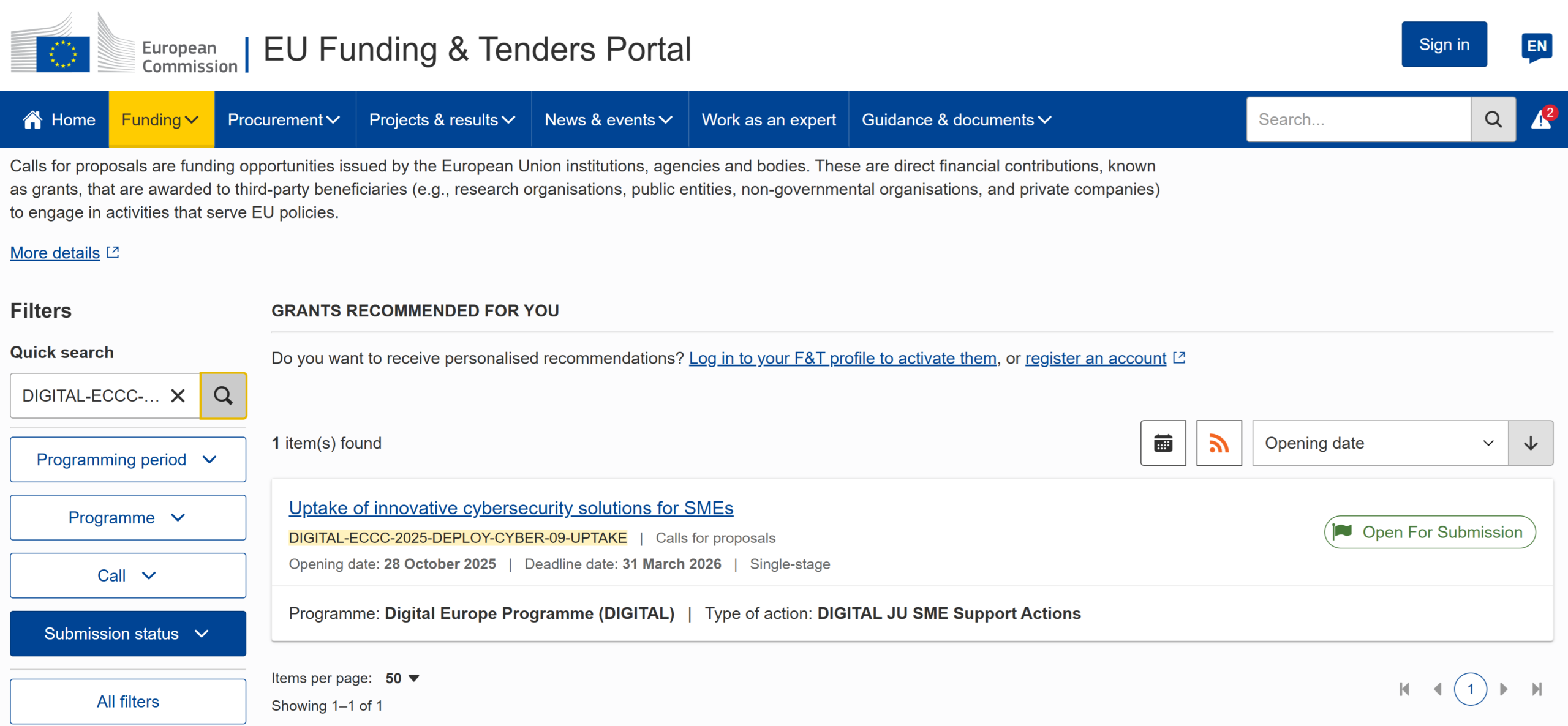
2. The next step is to find the appropriate call for proposals. Use this search engine for calls for proposals. Enter keywords or the full name of the call, e.g. “DIGITAL-ECCC-2025-DEPLOY-CYBER-09-UPTAKE“. However, it is often easier and faster to go directly to the NCP DEP website, where you can find the call of interest and click its linked title to open the details.
Submit an Application
1. After reviewing the detailed information about the call, go to the “Start submission” section. Here, you should select the type of application and then click “Start submission” to begin the application process.
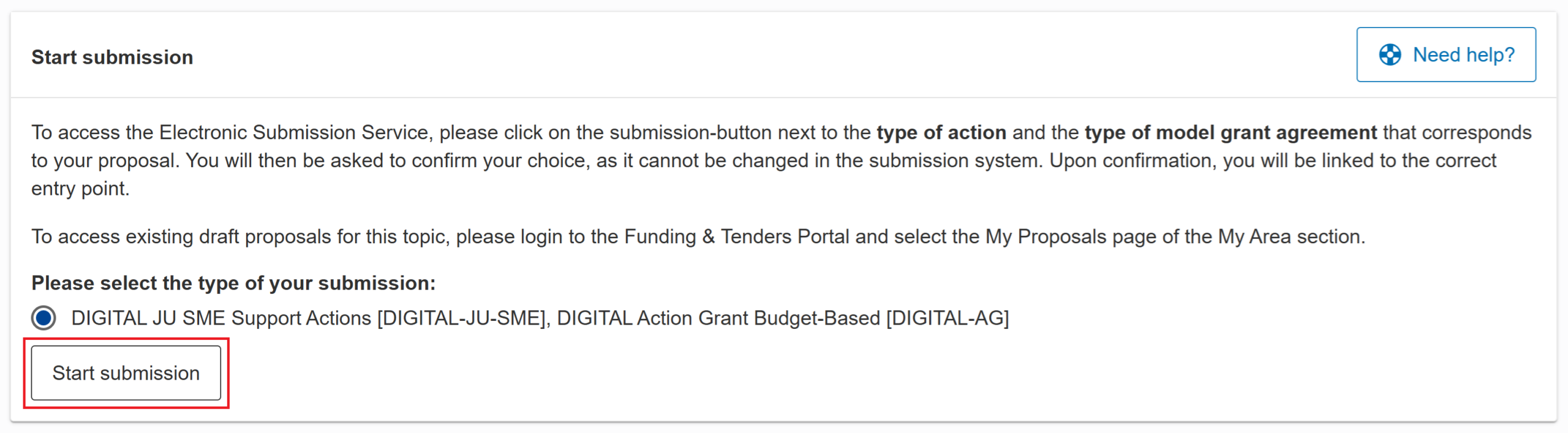
2. After accepting the message, the application wizard will open, divided into two parts: A and B.
- Part A is formal in nature and includes data on applicants, while Part B contains a detailed description of the planned project.
- The wizard provides instructions for completing the form (in English) and allows you to download templates for Part B.
- Submitting your application at the last minute is not recommended, as a heavy system load may prevent successful submission. The safest approach is to submit your application at least three days before the deadline.
3. After the call closes, each application is assessed by independent experts as well as by the European Commission and HaDEA services. The process consists of three stages:
- Eligibility check – verification of whether the application meets the basic requirements of the call.
- Evaluation of content – carried out by experts on the basis of three criteria:
- relevance – alignment of the project with the scope and objectives of the call for proposals and EU policy,
- implementation – the applicant’s capacity to effectively carry out the project
- impact – expected results, objectives, and the project’s influence on society, the environment, and the economy.
- Establishment of a ranking list and funding decision.
4. Once the funding is awarded, the organization signs a grant agreement with the European Commission. A template for such an agreement is available here.
5. After the agreement is signed, funds are disbursed – usually in the form of an initial installment (advance payment) representing approximately 50% of the grant value. Subsequent funds are transferred as interim payments, and the final portion is made as the final payment.
Schedule of Future Calls
If an organization is not eligible for the current calls for proposals, it is worth monitoring the planned calls for proposals under the Digital Europe Programme 2025–2027. Knowing the schedule gives you time to:
- build a consortium,
- refine the project concept,
- analyze compliance with EU regulations.
Secure EU Grants for MFA Implementation (Digital Europe Programme 2025–2026)
Rublon MFA is an innovative multi-factor authentication solution that perfectly meets the cybersecurity needs of SMEs and complies with European regulations.
As part of the “Uptake of innovative cybersecurity solutions for SMEs” call for proposals (DIGITAL-ECCC-2025-DEPLOY-CYBER-09-UPTAKE), an SME company can apply for funding to implement an innovative cybersecurity solution, such as Rublon MFA.

Key benefits of implementing Rublon MFA:
- Increased protection of user data and accounts – thanks to phishing-resistant multi-factor authentication.
- NIS2 and Cyber Resilience Act Compliance – facilitates the implementation of these documents’ regulatory requirements for ensuring strong authentication and multi-factor authentication (MFA).
- Simple implementation in SMEs – low entry cost and quick results.
- Potential in the UPTAKE call for proposals – A world-class MFA may serve as a key differentiator in technology projects.
Digital Europe Programme 2025-2026 – Obtain Funding for the Implementation of MFA
The Digital Europe programme is a strategic and real opportunity to finance cybersecurity projects of significant economic and regulatory importance. Current cybersecurity calls offer funding for AI technologies, SME cyber resilience (including multi-factor authentication implementation), and testing and preparedness for digital threats.
Rublon MFA is an example of a solution that can actually support SMEs in their digital transformation by strengthening access security and compliance with European standards.
Book a Consultation
Have questions? Contact us using the form below or directly at sales@rublon.com.
FAQ – Digital Europe Programme and MFA Funding
What is the Digital Europe Programme?
The Digital Europe Programme is a European Union initiative that supports the development of digital technologies, cybersecurity, and innovation in Member States.
Who can apply for funding under the Digital Europe Programme?
Organizations, public institutions, universities, companies and consortia that meet the eligibility criteria specified in the call for proposals documentation may apply for funding.
Can small and medium-sized businesses (SMEs) receive support for implementing MFA?
Yes, SMEs are eligible to apply for funding to support cybersecurity projects, such as the implementation of multi‑factor authentication (MFA), through the “Uptake of Innovative Cybersecurity Solutions for SMEs (UPTAKE)” program.
How do I get a PIC (Participant Identification Code)?
A PIC number is assigned after an organization registers in the EU Participant Register. It is required for submitting funding applications.
What costs can be covered by the grant?
Funding may cover, among other things, the costs of implementing technology, licenses, consulting services, training, and activities related to digital security.
What does the application process look like?
The process includes: registering an EU Login account, registering your organization in the Participant Register, obtaining a PIC number, selecting a call for proposals, completing parts A (formal) and B (project description) and submitting the online application.
How long does it take to evaluate an application?
Application evaluation takes place in three stages (eligibility, substantive assessment, ranking list) and may take several months.
What criteria are taken into account when evaluating a project?
Projects are assessed in terms of relevance (compliance with EU objectives), implementation (the organization’s ability to implement the project) and impact (impact on society, the economy and the environment).
Does MFA implemented as part of the project have to meet certain standards?
Yes, MFA implemented under the Digital Europe Programme must comply with EU cybersecurity and interoperability guidelines. This means compliance with legal frameworks such as the NIS2 Directive and ENISA guidelines on the NIS2 Directive requirements for MFA. Projects must also meet the requirements for digital services funded by the Digital Europe Programme.
Where can I find current calls for proposals in the Digital Europe Programme?
Current calls for proposals are published in the Funding & Tenders Portal.