
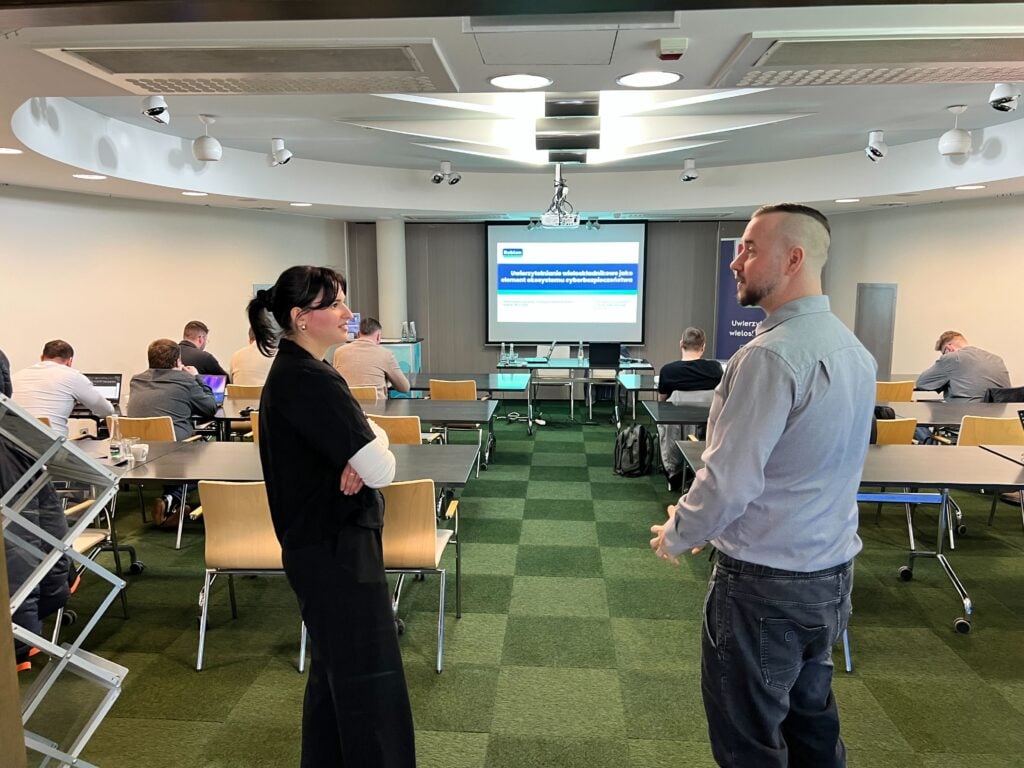
On March 9, 2026, another technical training session for Rublon Partners took place in Krakow, Poland. The event brought together representatives of Partner companies from various parts of Poland who were interested in developing their expertise in multi-factor authentication and the practical use of Rublon MFA in projects delivered for customers.
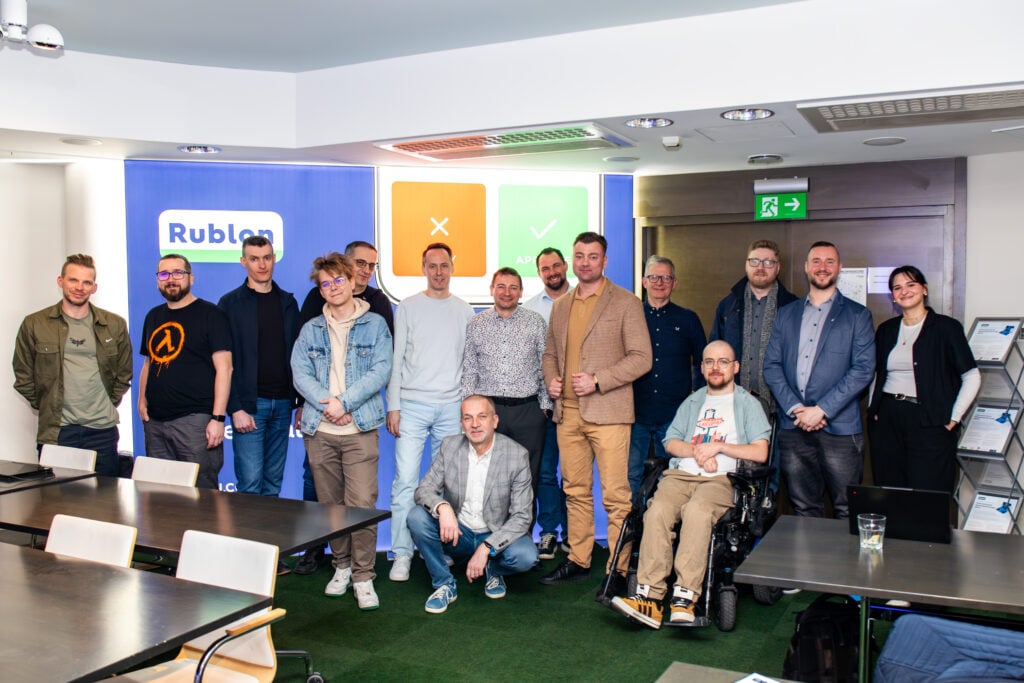
The event was yet another edition in the series of Partner meetings organized by Rublon. As with previous editions, the training combined theoretical knowledge with a practical look at the deployment, configuration, and integration of the Rublon MFA solution in business environments.
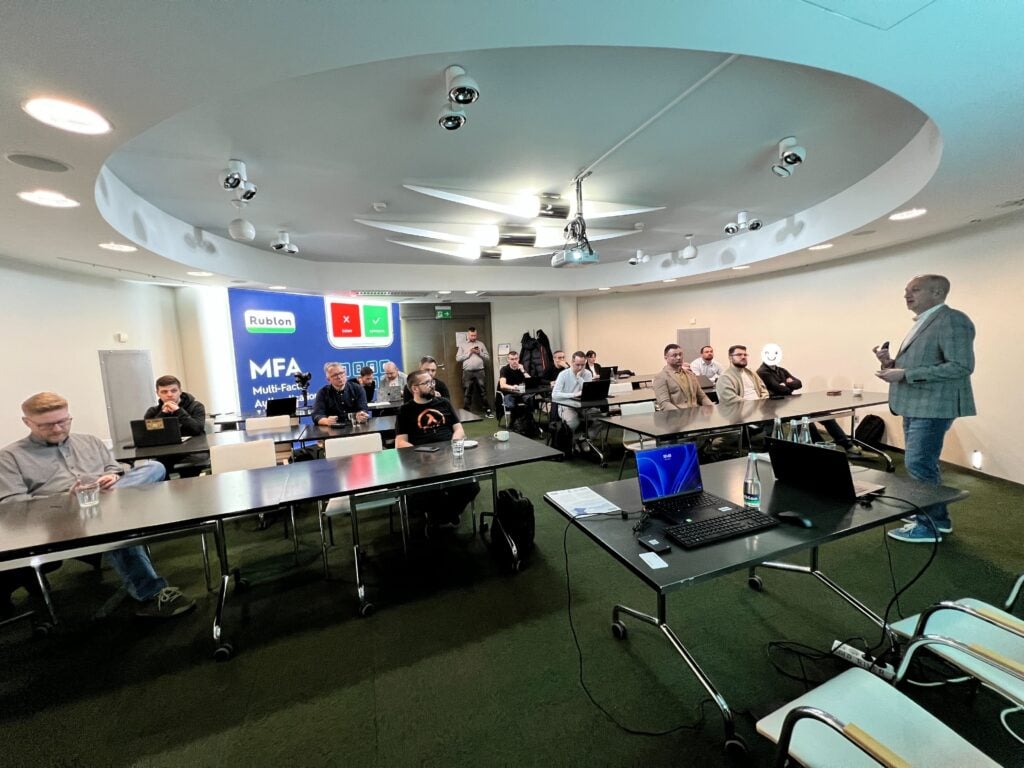
The training was led by Przemyslaw Kucharzewski, Channel Sales Manager, and Patryk Suchorowski, IT Architect. The first part of the session had an introductory character and focused on the market and regulatory background behind the growing demand for MFA. Participants then moved on to more technical topics related to administration, deployment, and Rublon MFA integrations.
Not using Rublon MFA yet?
Protect your VPNs, applications, endpoints, and servers from hackers with our advanced multi-factor authentication solution. Easily integrate the Rublon MFA platform using RADIUS, LDAP, or SAML protocols, or through dedicated connectors and plugins.
MFA and Cybersecurity in Business Practice
The event opened with a discussion of the role of multi-factor authentication in a modern approach to access protection. Przemyslaw Kucharzewski presented Rublon MFA as a solution that addresses both growing security requirements and the real needs of organizations looking for effective, scalable, and flexible methods of protecting logins.
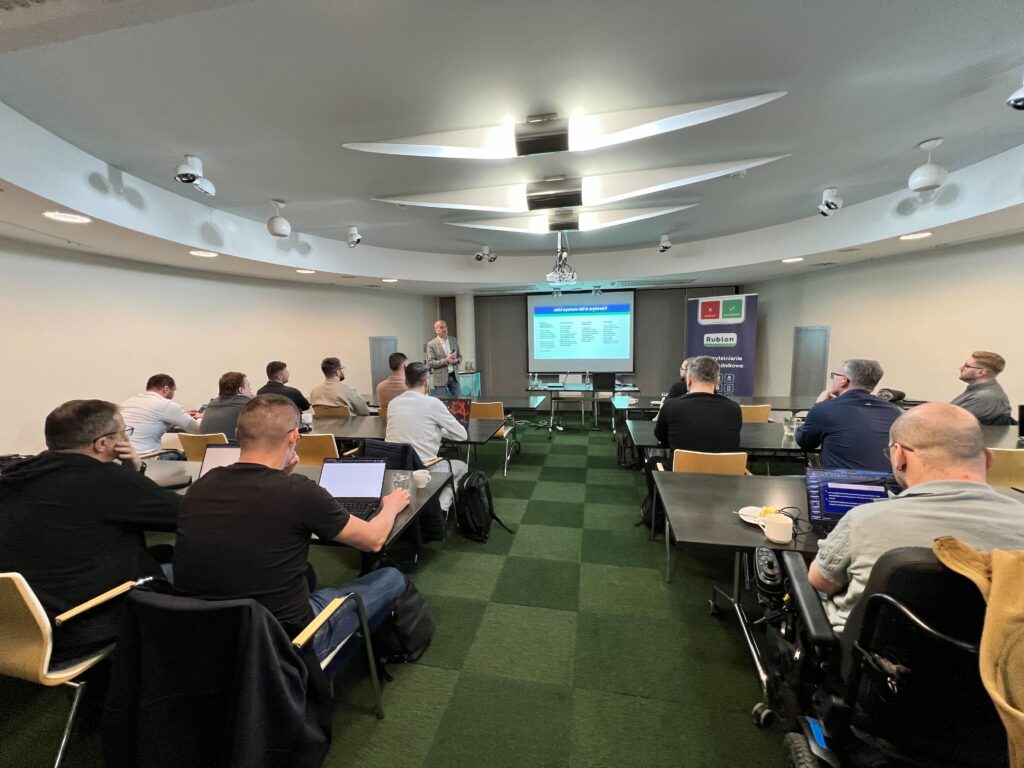
In this part, participants had the opportunity to familiarize themselves with the platform’s architecture, available authentication methods, and the broad integration capabilities of Rublon MFA. The regulatory context was also discussed, including the impact of the NIS2 Directive and the changes resulting from the recently amended Polish National Cybersecurity System Act (KSC). These factors increasingly make MFA deployment not only a best practice, but also part of preparing organizations for new formal requirements.

Przemyslaw Kucharzewski
Channel Sales Manager at RublonA Practical Look at the Rublon Admin Console
The next part of the training was dedicated to working with the Rublon Admin Console. Patryk Suchorowski presented in detail how the administration console works and its role in managing an MFA environment.
Participants learned about the most important functions of the Rublon MFA platform from the perspective of an administrator’s daily work, including:
- user and group management,
- API key handling,
- security policy configuration,
- directory synchronization using Directory Sync,
- the user enrollment process,
- device and authentication method management,
- and the organization of administrators’ work within the console.
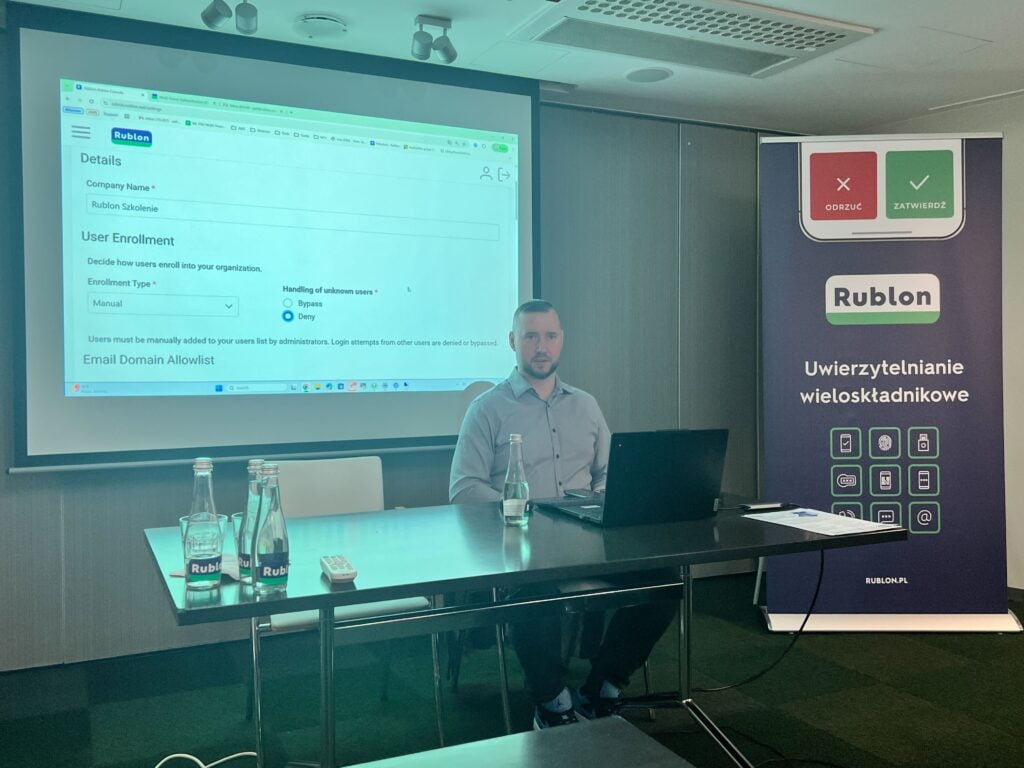
A great deal of attention was also devoted to the Rublon Prompt view and the features related to user authenticator management. Thanks to this, participants were able to see how the platform works not only from the administrator’s perspective, but also from the end user’s point of view.

Patryk Suchorowski
IT Architect at RublonIntegrations with Windows and VPN
In the next part of the training, participants moved on to practical examples of integrating the Rublon MFA platform in real deployment scenarios. These included, among others:
- The Rublon MFA for Windows Logon & RDP connector, as well as the configuration and use of Offline Mode in this connector,
- The Rublon Authentication Proxy service and its integration with Fortinet FortiGate VPN as an example,
- as well as best practices for deploying MFA in production environments.
This part of the session was especially practical in nature. Participants were able to follow the successive configuration stages and see how the individual components of Rublon MFA work together with the Windows environment and network infrastructure.
Participants’ Questions and Discussions About the Future of the Product
The training in Krakow created space for active discussion. Participants asked questions related to day-to-day administration, planning deployments for customers, as well as general cybersecurity best practices. Among the topics discussed were:
- multi-factor authentication (MFA) using RFID cards
- user statuses,
- licensing,
- Directory Sync and its capabilities,
- the use of Bypass Mode,
- the approach to phased deployments,
- administrator accounts,
- PoC environments and NFR versions,
- as well as issues related to business continuity in the case of failures.
We also received suggestions regarding the further development of the platform. Meetings like this are a valuable source of insight into the needs of our Partners and their customers, which is why every remark and every comment has a real impact on the direction in which we develop Rublon MFA.
Developing Partner Competencies Together
The training in Krakow confirmed that direct meetings with Partners are an important part of building a strong ecosystem around Rublon MFA. The opportunity to talk, ask questions, jointly analyze deployment scenarios, and exchange experiences makes such events valuable both from an educational perspective and a business one.
Both the presenters and participants agreed that regular technical training supports knowledge development, helps better understand market needs, and strengthens relationships within the Partner network.
Patryk Suchorowski
IT Architect at RublonSummary
The training for Rublon Partners in Krakow, Poland was another step in developing the community of MFA specialists working with Rublon. The high level of participant engagement, the quality of the technical discussions, and the open exchange of experience show that investing in knowledge together translates into real benefits for Partners and their customers.
Become a Rublon Partner and Grow Your Business Around MFA
By joining the Rublon Partner network, you gain access to proven MFA technology, practical support, and knowledge that helps you effectively expand your security offering for customers. Together, we are building a partnership based on competence, trust, and a modern approach to cybersecurity.